The Man Who Cracked the World
From a seventeen-year gamble in the Texas dirt to a global shift in power, one man’s stubbornness unlocked the world's most controversial energy source.
This story began with a question: “How did George Mitchell change the history of energy?”
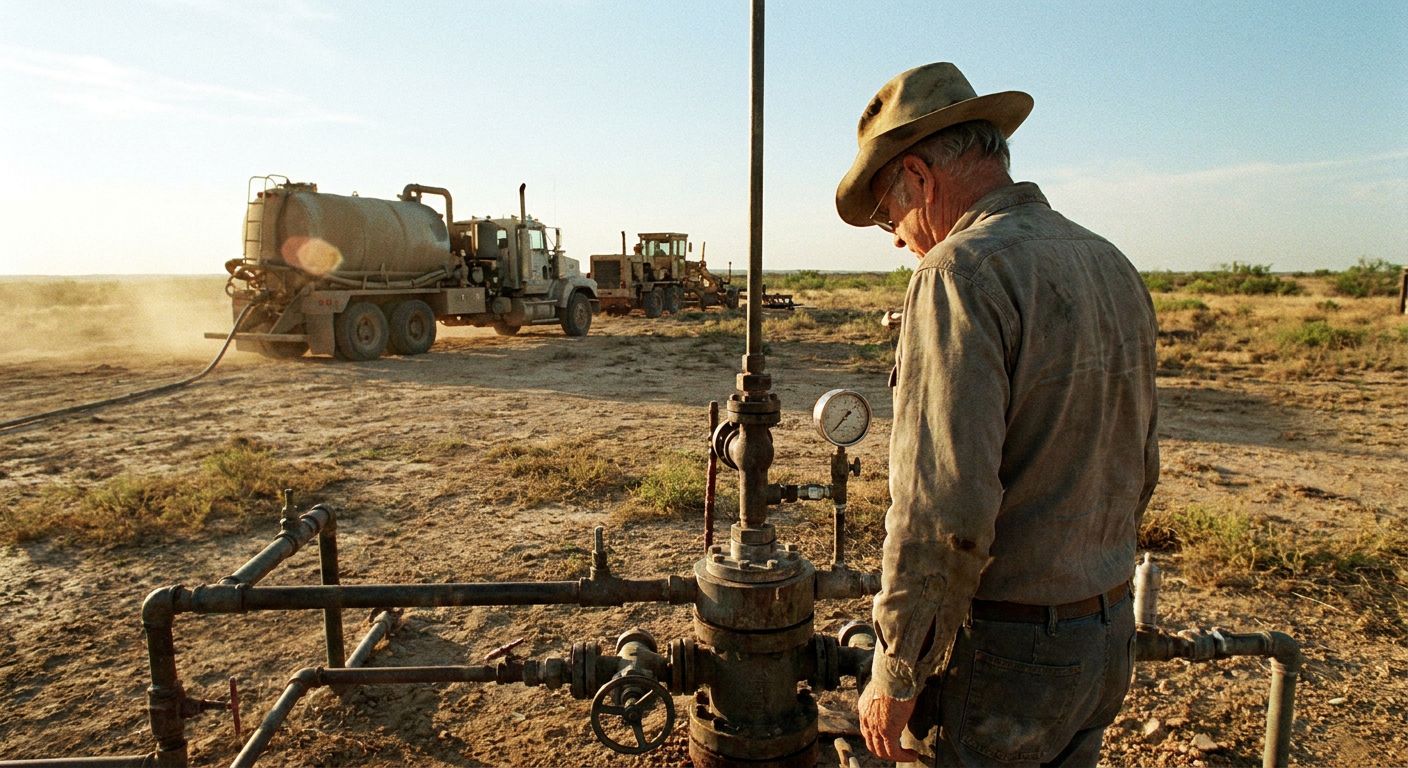
On a sweltering Texas afternoon in the early 1980s, a man named George Mitchell stood on a patch of scrubland in the Barnett Shale, staring at a problem that the rest of the energy industry had already abandoned. Beneath his boots lay a vast formation of sedimentary rock, a graveyard of ancient marine life compressed over millions of years into dense, black shale. The industry knew the gas was there; they just called it "tight" because the rock refused to let it go. To the giants of Exxon and Shell, the Barnett was a curiosity, a geological dead end. But Mitchell, the son of a Greek immigrant who had once shined shoes in Galveston, was a man who viewed stubbornness as a primary engineering tool.
For nearly two decades, Mitchell and his team at Mitchell Energy & Development poured millions of dollars into the Texas dirt, chasing a theory that most experts dismissed as a fool’s errand. They were trying to unlock the "source rock" itself. Traditionally, oilmen hunted for "pools"—places where oil and gas had escaped the shale and gathered in porous sandstone. Mitchell wanted to go straight to the kitchen where the energy was cooked. By the time he succeeded, he hadn't just saved his company; he had inadvertently rewritten the geopolitical map of the 21st century.
The Seventeen-Year Gamble
The story of the shale revolution didn't begin with a breakthrough, but with a series of expensive, demoralizing failures. Mitchell’s obsession was hydraulic fracturing—"fracking"—a technique that had been around since the 1940s but was generally used to stimulate flow in conventional wells. Mitchell believed that if you could pump enough high-pressure fluid into the shale, you could shatter the rock and create a man-made network of cracks, allowing the trapped gas to bleed out.
His peers in the industry watched with a mix of pity and amusement. Between 1981 and 1998, Mitchell Energy spent upwards of $250 million experimenting with different "recipes" for fracking fluid. They tried thick gels, foams, and complex chemical cocktails, yet the results remained meager. The company’s investors were restless, and the board of directors frequently questioned why so much capital was being lit on fire in the Barnett Shale.
The turning point came not from a new high-tech invention, but from a simplification. One of Mitchell's engineers, Nick Steinsberger, suggested a "slickwater" frack—essentially using mostly water and sand with fewer expensive chemicals. In 1998, they tried it on the S.H. Griffin No. 4 well. The gas didn't just trickle out; it roared. Mitchell had finally found the key to the lock. By combining this technique with horizontal drilling—turning the drill bit ninety degrees to run sideways through the narrow layer of shale—he turned a pinprick into a wide-open door.
A Geopolitical Seismic Shift
Before Mitchell’s breakthrough, the narrative of global energy was one of terminal decline for the United States. The phrase "Peak Oil" dominated the headlines, and the U.S. was building massive terminals to import liquefied natural gas from the Middle East and Russia. Policy experts warned that American dependence on foreign energy was an inescapable vulnerability. Mitchell’s stubbornness flipped that script in less than a decade.
As the "Mitchell Recipe" spread from the Barnett Shale to the Marcellus in Appalachia and the Bakken in North Dakota, the U.S. transformed from a desperate importer into a dominant exporter. This wasn't just about cheaper heating bills; it shifted the scales of global power. The influence of the OPEC cartel began to wane as a new flood of American supply hit the market. For the first time in generations, the U.S. found itself with a "diplomacy of abundance," able to leverage its energy exports to support allies in Europe and Asia, fundamentally altering how Washington interacted with petro-states like Russia and Iran.
The Legacy of the "Source Rock"
However, the revolution Mitchell sparked was not without a heavy toll. The rapid expansion of fracking brought the heavy machinery of the oil patch into suburban backyards and quiet farmlands. Concerns over groundwater contamination, methane leaks, and even man-made earthquakes—caused by the disposal of fracking wastewater—turned the technology into a cultural and political lightning rod.
George Mitchell himself was a complex figure in this debate. A dedicated philanthropist and a pioneer of sustainable urban design, he founded The Woodlands, a master-planned community north of Houston designed to coexist with nature. He spent the final years of his life advocating for stronger regulation of the very industry he had reinvented. He understood that he had handed humanity a powerful new fire, but he was deeply concerned about whether we were disciplined enough to handle the smoke.
Today, the world lives in the era Mitchell built. Every time a geopolitical crisis ripples through the gas markets of Europe, or a new wind farm is backed up by a natural gas plant, the echoes of that seventeen-year gamble in the Texas scrubland can be heard. George Mitchell didn't just find a new way to drill; he proved that the greatest energy reserves aren't found in the ground, but in the refusal to accept that a door is truly locked.
This story travelled through
Where does this story take you next?
Every story opens a door somewhere else. Pick a thread and we'll tell you that story too.
Curious about something else?
Discover another exploration