The Baker and the Pressure Cooker: A Tale of Two Shales
One is a geological teenager that needs a blowtorch to grow up; the other is a pressurized ghost trapped in the deep dark.
This story began with a question: “What is the difference between oil shale and shale gas?”
If you were to stand in the high, wind-swept basins of Wyoming or the rolling plains of Estonia, you might be walking over a fortune that is technically made of the same ingredients, yet occupies two completely different worlds of chemistry. To the naked eye, the rocks look similar: dark, fine-grained, and deceptively heavy. But for the engineers and geologists who try to coax energy from the earth, the difference between oil shale and shale gas is the difference between a raw cake batter that still needs to be baked and a finished meal that just needs to be served.
At the heart of this distinction is a process called "thermal maturity." Both substances began their lives millions of years ago as organic sludge—algae, plankton, and plant matter—trapped at the bottom of ancient lakes and seas. As layers of sediment piled on top, this organic matter was squeezed into a waxy substance called kerogen. This is the "oil" in oil shale. However, the name is a bit of a trick. Oil shale doesn't actually contain liquid oil; it contains the solid potential for oil.
The Baker and the Blowtorch
Imagine oil shale as a geological teenager. It has all the components to become a liquid fuel, but it hasn't lived through the intense heat and pressure required to complete the transformation. Because nature didn't finish the job, humans have to intervene. To get anything useful out of oil shale, the rock must be mined, crushed, and then heated to roughly 500 degrees Celsius (932 degrees Fahrenheit) in a process called retorting.
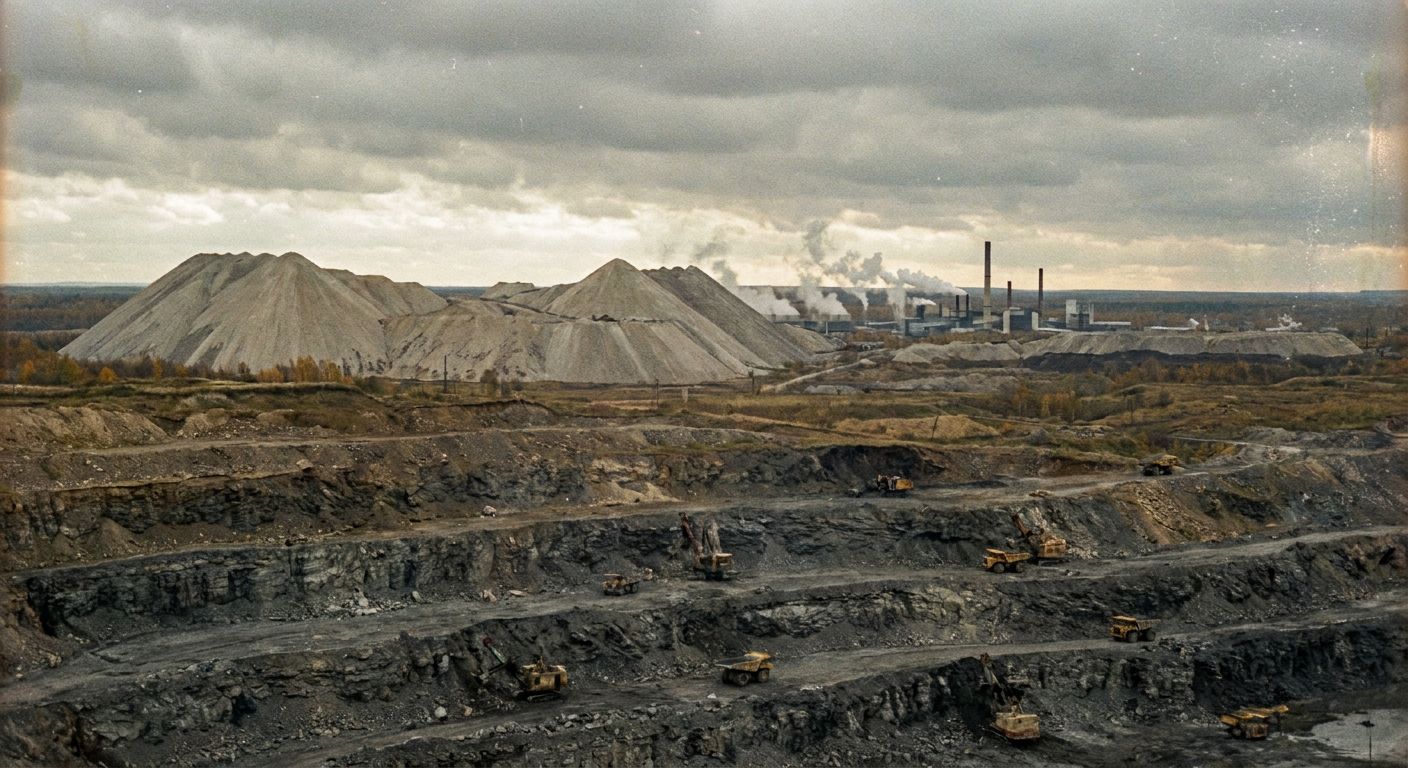
This "cooking" of the rock breaks down the long-chain molecules of kerogen into shorter liquid hydrocarbons. It is an incredibly energy-intensive process that requires massive amounts of water and produces mountains of spent rock. In Estonia, where oil shale has been the backbone of the economy for a century, the landscape is defined by "ash mountains"—titanic heaps of processed stone left over after the energy has been extracted. It is a story of brute force: we are essentially trying to finish in hours what the Earth usually takes millions of years to do.
The Deep Pressure Cooker
Shale gas, on the other hand, is the result of the Earth’s own finished alchemy. While oil shale sat relatively near the surface in cooler zones, the organic matter that became shale gas was buried miles deep, where the internal heat of the planet acts like a pressure cooker. Under these extreme conditions, the kerogen didn't just turn into liquid; it "cracked" even further into tiny, volatile gas molecules—mostly methane.
This gas is now trapped inside the microscopic pores of the shale rock, like bubbles of air in a very dense loaf of bread. Unlike oil shale, we don't need to cook this rock to get the energy out. The Earth already did the baking. The challenge here isn't chemistry, but physics. Because the rock is "tight"—meaning the pores aren't connected—the gas can't flow on its own. This is where the controversial technique of hydraulic fracturing, or "fracking," comes in. By injecting high-pressure water and sand, engineers shatter the rock, creating artificial pathways for the trapped gas to rush to the surface.
A Tale of Two Landscapes
The physical footprint of these two resources creates vastly different worlds above ground. Because oil shale is often close to the surface, it is frequently harvested via open-pit mining. You see massive scars in the earth, giant excavators, and processing plants that belch steam as they cook the stone. It is a heavy, industrial endeavor that feels more like coal mining than oil drilling.
Shale gas operations are more discreet but more widespread. A single well pad might be tucked into a corner of a cornfield in Pennsylvania or a ranch in Texas. From that one spot, drills can turn horizontally, snaking for miles through the deep shale layers. While the surface disruption might be smaller at each site, the sheer number of wells required to keep the gas flowing creates a sprawling web of infrastructure across the countryside.
The Weight of the Future
Despite their potential, both resources carry heavy baggage. Oil shale is often called the "fuel of the future"—a joke among geologists because it has been touted as a solution to energy crises since the 1970s, yet its high cost and environmental toll have kept it from global dominance. The amount of energy you have to spend to "bake" the rock often rivals the energy you get out of it, making it a difficult economic proposition in a world leaning toward decarbonization.
Shale gas, meanwhile, transformed the global energy market in the early 21st century, turning countries like the United States from importers to exporters. Yet, it faces its own reckoning. The methane that leaks from shale gas wells is a potent greenhouse gas, far more effective at trapping heat than carbon dioxide in the short term. As we look at these dark, heavy rocks, we see the remnants of ancient life that the Earth spent eons refining. Whether we choose to finish the Earth’s cooking or tap into the reservoirs it has already prepared, the story of shale is one of human ingenuity clashing with the limits of the natural world.
This story travelled through
Where does this story take you next?
Every story opens a door somewhere else. Pick a thread and we'll tell you that story too.
Curious about something else?
Discover another exploration