The Stone Sentinels of the North
Rising like stone skyscrapers from the Atlantic mist, these Iron Age towers are the greatest architectural mystery of ancient Scotland.
This story began with a question: “Who really built the Scottish brochs?”
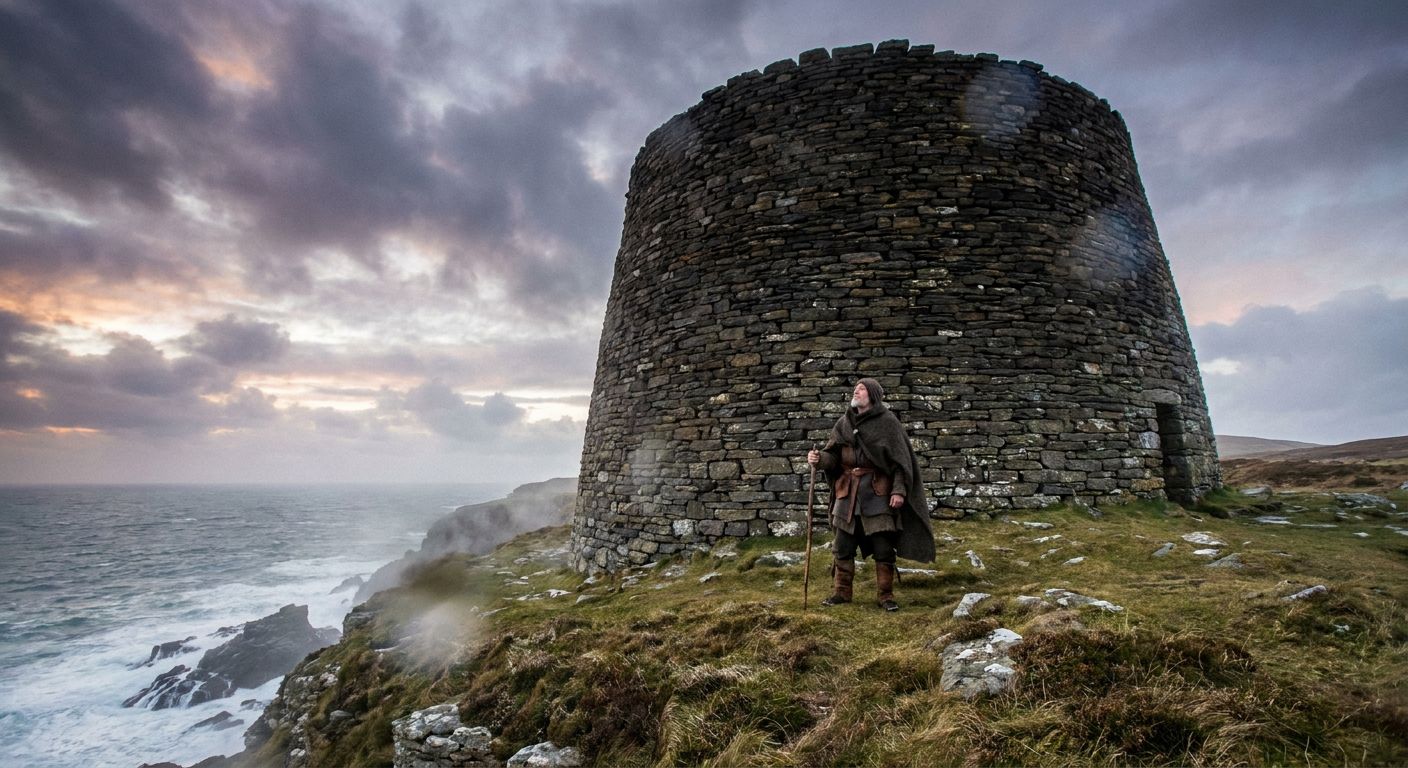
If you stand on the windswept coast of the Shetland Islands or the green fringes of the Isle of Skye, you will likely see them: massive, circular stone towers rising like broken teeth from the landscape. These are the brochs. Built from stacked, unmortared stone, they represent the pinnacle of Iron Age dry-stone engineering. For centuries, these structures were so imposing and so mysterious that locals believed they were the work of giants or the mythical "Picts" of legend. But as we peel back the layers of Scottish soil, a different story emerges—one of a sophisticated, resilient society that managed to build skyscrapers in a world of timber and thatch.
The Architect’s Secret
To understand who built the brochs, you first have to understand the genius of the "hollow wall." Unlike a simple castle wall, a broch is actually two concentric walls of dry stone, tied together by horizontal flagstones that create a series of galleries and stairs between the layers. This design was the Iron Age version of a steel frame; it allowed the towers to reach heights of over 13 meters (roughly 40 feet) without collapsing under their own weight.
The people behind this were not invading foreigners or wandering architects from the Mediterranean, as early Victorian antiquarians often speculated. Modern archaeology tells us they were the indigenous inhabitants of Atlantic Scotland. Between 400 BC and 100 AD, these farming and fishing communities evolved their building styles from simple roundhouses into these formidable towers. They were a people deeply connected to the sea and the stone, transforming the raw geology of the Highlands and Islands into a statement of power and permanence.
A Landscape of Rivalry
Why would a small community of perhaps twenty or thirty people spend years hauling thousands of tons of stone to build a single tower? The answer lies in the tension of the Iron Age landscape. These were not lonely outposts; in places like Orkney, brochs were often built within sight of one another. This suggests a society defined by "competitive conspicuous consumption."
A broch was the ultimate status symbol. If your neighbor built a tower, you built one slightly taller. It was a visual shout across the glen: We are established, we are defended, and we are wealthy. Inside, the floors were divided into living quarters, hearths, and workshops. They were high-status farmhouses, providing warmth against the North Atlantic gales and security against cattle raiders or slave traders. In an era where the Roman Empire was expanding far to the south, the broch-builders were asserting their own brand of northern sovereignty.
The Mystery of the Vanishing Towers
Around 200 AD, the "Broch Age" began to fade, but the builders didn't disappear. Instead, they changed. Many brochs were partially dismantled or "scanted"—their upper stories taken down to build lower, more sprawling dwellings known as wheelhouses. This shift marks a profound change in Scottish society. The need for towering vertical defense seems to have evaporated, replaced by a preference for cozy, subterranean luxury.
Some historians suggest this transition reflects a cooling climate or a change in social hierarchy, where the grand posturing of the tower-builders was no longer sustainable. Yet, the foundations they laid remained. Even as the Roman legions abandoned their attempts to conquer the north, the descendants of the broch-builders continued to farm the same fields, their massive stone skeletons serving as a reminder of an era when the people of the north reached for the sky.
The Stones that Speak
Today, the Broch of Mousa in Shetland stands as the best-preserved example, nearly complete after two millennia. Walking into its cool, dark interior, you can still feel the texture of the stones shaped by hands that lived two thousand years ago. The brochs were not built by a single "king" or a distant empire; they were the collective effort of families and clans who refused to be overlooked by history. They built for the ages, and in the enduring silence of the stones, their presence is still felt, defying the wind and the salt spray of the Scottish coast.
This story travelled through
Where does this story take you next?
Every story opens a door somewhere else. Pick a thread and we'll tell you that story too.
Curious about something else?
Discover another exploration