The Silver Tide: Why Málaga is Drowned in Olive Trees
Across the sun-drenched hills of Andalusia, a silver-green tide of millions of trees tells a 3,000-year story of empires, survival, and liquid gold.
This story began with a question: “Why are there so many olive trees around Málaga?”
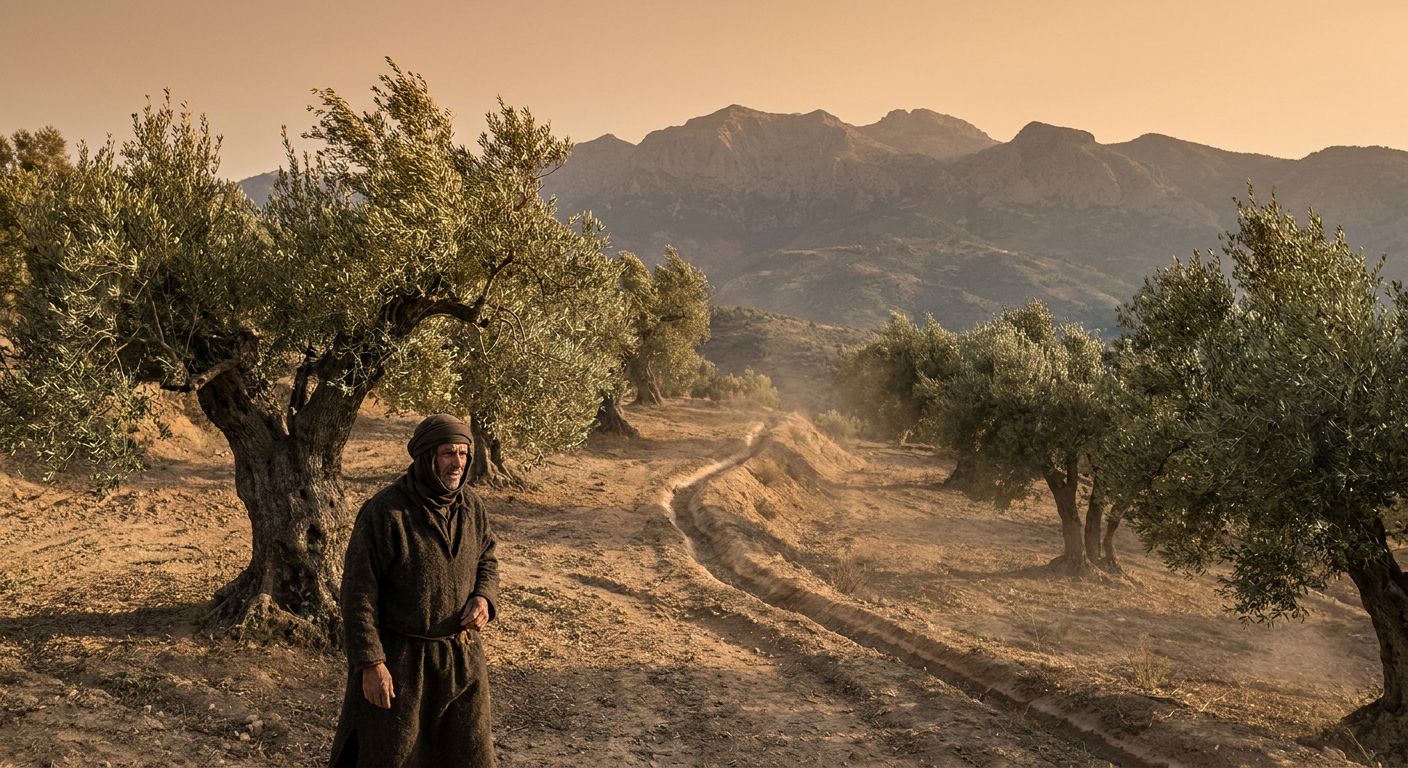
If you stand on a high balcony in the city of Málaga and look north, beyond the sun-bleached terracotta roofs and the Gothic spire of the cathedral, you will see the beginning of an emerald tide. It starts as a dusting of silver-green on the rolling foothills and quickly swells into an unbroken sea that covers the mountains of the Axarquía and stretches into the deep heart of Andalusia. This is not a wild forest; it is a disciplined, ancient army of millions of olive trees, standing in rows so precise they seem to vibrate against the heat haze.
In Málaga, the olive tree is more than just agriculture; it is the landscape’s very skeleton. To understand why this province—and its neighbor Jaén—became the olive oil capital of the world, one must look past the modern stainless-steel presses and into a history of empires that rose and fell on the strength of "liquid gold."
The Phoenician Footprint
The story does not begin with the Spanish, nor even the Romans, but with the seafaring Phoenicians who landed on Málaga’s coast nearly 3,000 years ago. When these traders from the Levant established the colony of Malaka around 770 BCE, they brought with them the Olea europaea. They recognized that the Mediterranean basin offered a specific, almost magical combination of factors: mild, wet winters and long, scorching summers where the sun bakes the soil into a hard crust.
While the Phoenicians introduced the tree, it was the Romans who industrialized it. Under the Roman Empire, the province of Hispania Baetica (modern-day Andalusia) became the pantry of Rome. The Guadalquivir river valley served as a massive conveyor belt, moving millions of amphorae filled with Andalusian oil to the ports of the empire. Archaeologists in Rome once discovered a massive hill, Monte Testaccio, composed almost entirely of the fragments of 53 million olive oil jars—the vast majority of which bore stamps tracing them back to the groves of southern Spain.
A Legacy of the Moors
As the Roman Empire faded, the arrival of the Moors in the 8th century redefined the landscape once again. The Arabs and Berbers brought sophisticated irrigation techniques and a deep botanical curiosity. They refined the cultivation of the olive, introducing new varieties and perfecting the art of the almazara—the oil mill. Even today, the Spanish word for oil, aceite, comes from the Arabic al-zait, meaning "juice of the olive."
During the centuries of Al-Andalus, the hills around Málaga were transformed. The Moors utilized terracing to plant trees on steep slopes that were otherwise useless for grain or cattle. This allowed the olive to claim the vertical space of the province, climbing the rugged sierras where nothing else would grow. The trees became a symbol of stability; an olive tree can live for over a thousand years, outlasting dynasties and crusades. To plant an olive grove was to make a bet on the next ten generations.
The Great Monoculture
The modern ubiquity of the olive tree, however, is a result of more recent economic shifts. In the 19th and 20th centuries, as transportation improved and global demand for vegetable fats spiked, Málaga’s farmers leaned into their greatest strength. The olive tree is remarkably resilient; it thrives in poor, stony soil and can survive droughts that would wither a grapevine or a wheat field.
Following the phylloxera plague that devastated the region’s famous sweet wine vineyards in the late 1800s, many landowners turned to the olive as a safer, sturdier alternative. This led to a "monoculture"—a landscape dominated by a single species. Today, Spain produces nearly half of the world's olive oil, and the groves around Málaga are a critical part of that engine. Walking through these groves in the autumn, you can hear the rhythmic vareo, the ancient practice of beating the branches with long poles to shake the ripening fruit onto nets spread across the red earth.
The Wisdom of the Silver Leaf
There is a sensory reason the olive tree feels so inseparable from Málaga. The underside of an olive leaf is a pale, shimmering silver. When the Terral wind blows off the mountains, the entire landscape changes color, shifting from deep green to a metallic grey in a single heartbeat. This "flicker" is the visual signature of the Mediterranean.
These trees are not just standing there for profit; they are environmental anchors. Their deep, twisting root systems hold the fragile Andalusian soil together, preventing the desertification that threatens much of southern Europe. They are also masters of patience. A tree planted today may not reach its peak production for fifty years, meaning every grove you see is a gift from a grandfather to a grandchild. The sheer volume of trees around Málaga is a testament to three millennia of people who looked at a rocky, sun-drenched hillside and saw not a wasteland, but a golden opportunity.
As the sun sets over the Sierra de las Nieves, the long shadows of the olives stretch across the valleys, stitching the mountains to the sea. The trees remain, silent witnesses to the Phoenician ships, the Roman carts, and the Moorish poets, still offering their bitter fruit to be transformed into the oil that runs through the veins of Spanish life.
This story travelled through
Where does this story take you next?
Every story opens a door somewhere else. Pick a thread and we'll tell you that story too.
Curious about something else?
Discover another exploration