The Sea of Olives: Why Málaga is Wrapped in Silver
Beyond the sun-drenched beaches of the Costa del Sol lies a landscape carved by three millennia of human ambition and the world's most resilient tree.
This story began with a question: “Why are there so many olive trees around Malaga?”
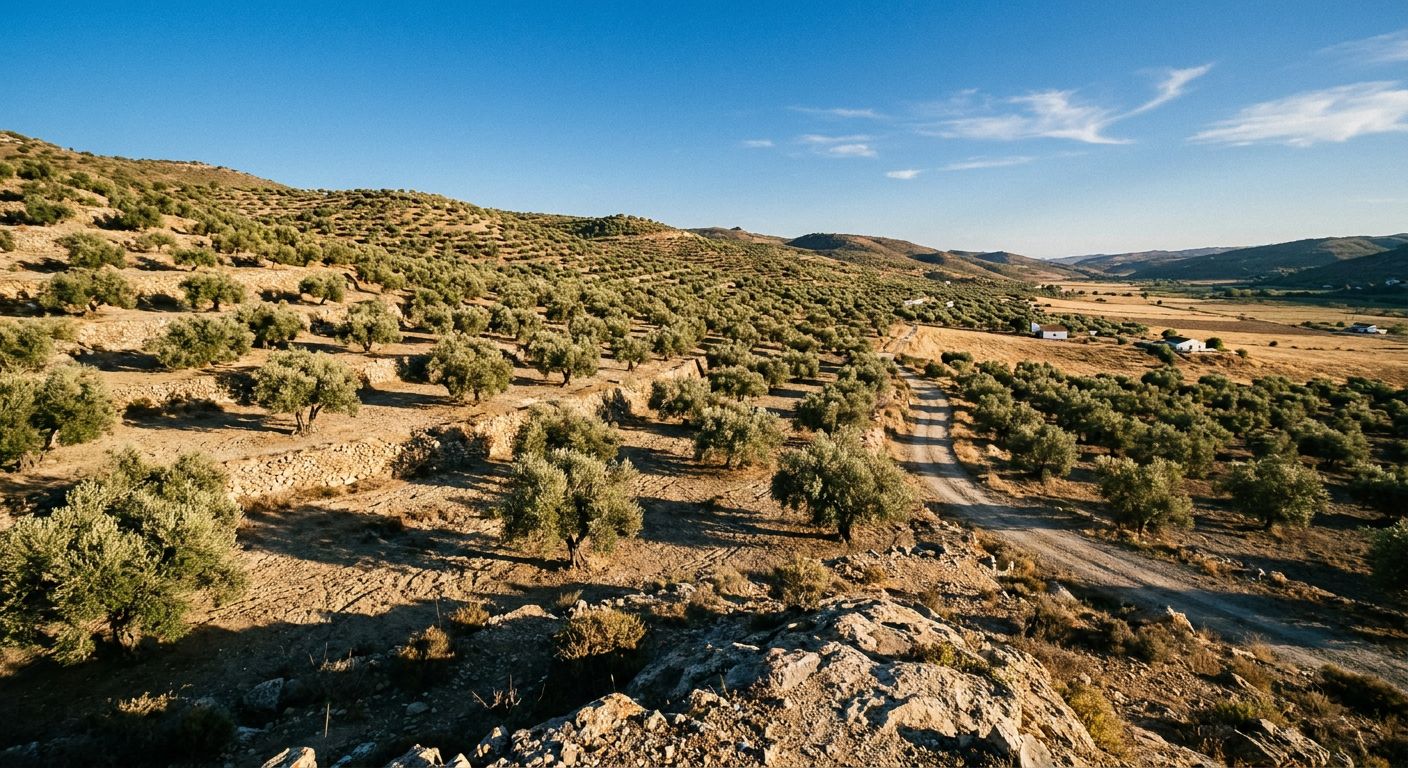
If you stand on a ridge in the Montes de Málaga and look inland, the landscape does not ripple with the chaotic greenery of a forest. Instead, it flows in silver-grey waves, a disciplined army of twisted trunks stretching toward the horizon. This is the mar de olivos—the sea of olives. In the province of Málaga alone, millions of these trees grip the sun-baked earth, their roots reaching into a history that predates the Spanish language, the Catholic monarchs, and even the Roman Empire.
The sheer density of these groves is not a quirk of nature, but the result of three thousand years of human obsession. The olive tree is the ultimate survivor of the Mediterranean climate, thriving where other crops wither. But its dominance around Málaga is also a story of colonial ambition, industrial revolution, and a liquid gold that once lubricated the gears of the ancient world.
The Phoenician Footprint
The story begins roughly 3,000 years ago with a seafaring people from the eastern shores of the Mediterranean: the Phoenicians. When these master traders sailed into the natural bay of Málaga (which they named Malaka), they brought with them the "holy trinity" of Mediterranean agriculture: the vine, the grain, and the olive.
Before their arrival, wild olives existed in the Iberian Peninsula, but they were small, bitter shrubs known as acebuches. The Phoenicians introduced the art of grafting, turning these wild stocks into high-yield producers of oil. They recognized that the rolling hills surrounding the coast offered the perfect drainage and limestone-rich soil the trees craved. For the Phoenicians, the olive was more than food; it was a portable, high-value commodity that could be traded for silver and tin. They planted the first true groves, setting a pattern of land use that would define the Andalusian landscape for millennia.
A Roman Powerhouse
While the Phoenicians started the fire, the Romans turned it into a furnace. When Rome conquered Hispania, they looked at the Guadalhorce valley and the surrounding hills of Málaga and saw a massive industrial opportunity. The Roman province of Baetica (modern-day Andalusia) became the primary oil supplier for the entire Empire.
Archaeologists have found evidence of massive Roman villae throughout the Málaga countryside, dedicated almost exclusively to the production of oil. This wasn't just for cooking. Olive oil was the electricity of the ancient world—it lit the lamps of Rome, fueled the heating systems of public baths, and served as the base for soaps and medicines. To facilitate this trade, the Romans built roads and expanded ports, ensuring that a jar of Málaga oil could reach the freezing frontiers of Hadrian’s Wall in Britain. The trees you see today are the descendants of a Roman supply chain that once fed the greatest empire on Earth.
The Islamic Legacy and the Mountain Terraces
Following the fall of Rome, the arrival of the Moors in the 8th century brought a new level of sophistication to the groves. The Islamic farmers were masters of hydraulics. They understood that while the olive tree is drought-tolerant, its yield increases dramatically with precise water management. They *built the intricate terraces and irrigation channels (acequias)* that still scar the hillsides of the Axarquía region east of Málaga.
The Moors also diversified the varieties of olives, selecting for different flavors and oil contents. They viewed the olive tree as a symbol of peace and permanence. Under their care, the groves expanded into the steeper, more difficult terrain of the mountains. Many of the oldest "centennial" trees found in the province today—gnarled, hollowed-out giants that look like living sculptures—were likely planted or tended by these medieval farmers. The Spanish word for oil, aceite, actually derives from the Arabic al-zait, a linguistic ghost of this era.
The Modern Golden Age
In the 19th and 20th centuries, the landscape underwent its final, most dramatic transformation. A devastating plague of phylloxera destroyed the region’s vast vineyards in the late 1800s, leaving thousands of farmers desperate. They turned to the one thing they knew would never fail them: the olive. Large swaths of land previously dedicated to Muscatel grapes were replanted with Hojiblanca and Verdial olive varieties.
Today, the provinces of Andalusia produce more than half of the world’s olive oil. For the people of Málaga, these trees are not just a crop; they are a cultural anchor. The harvest, or verdeo, remains a seasonal heartbeat for rural towns. From the sun-drenched hills of Antequera to the rugged cliffs of Ronda, the olive tree persists because it is perfectly attuned to the rhythm of the land. It survives the blistering summers and the biting winds of the Sierras, producing a liquid that remains, as it was three thousand years ago, the lifeblood of the Mediterranean.
When you walk through a grove in Málaga today, you are walking through a living library. Every silver leaf reflects a history of survival, trade, and the enduring human desire to turn a dry hillside into a fountain of gold.
This story travelled through
Where does this story take you next?
Every story opens a door somewhere else. Pick a thread and we'll tell you that story too.
Curious about something else?
Discover another exploration