The Rock That Broke the World
How a stubborn Texan and a layer of "worthless" rock triggered a global energy revolution.
This story began with a question: “What is the story of Barnett Shale?”
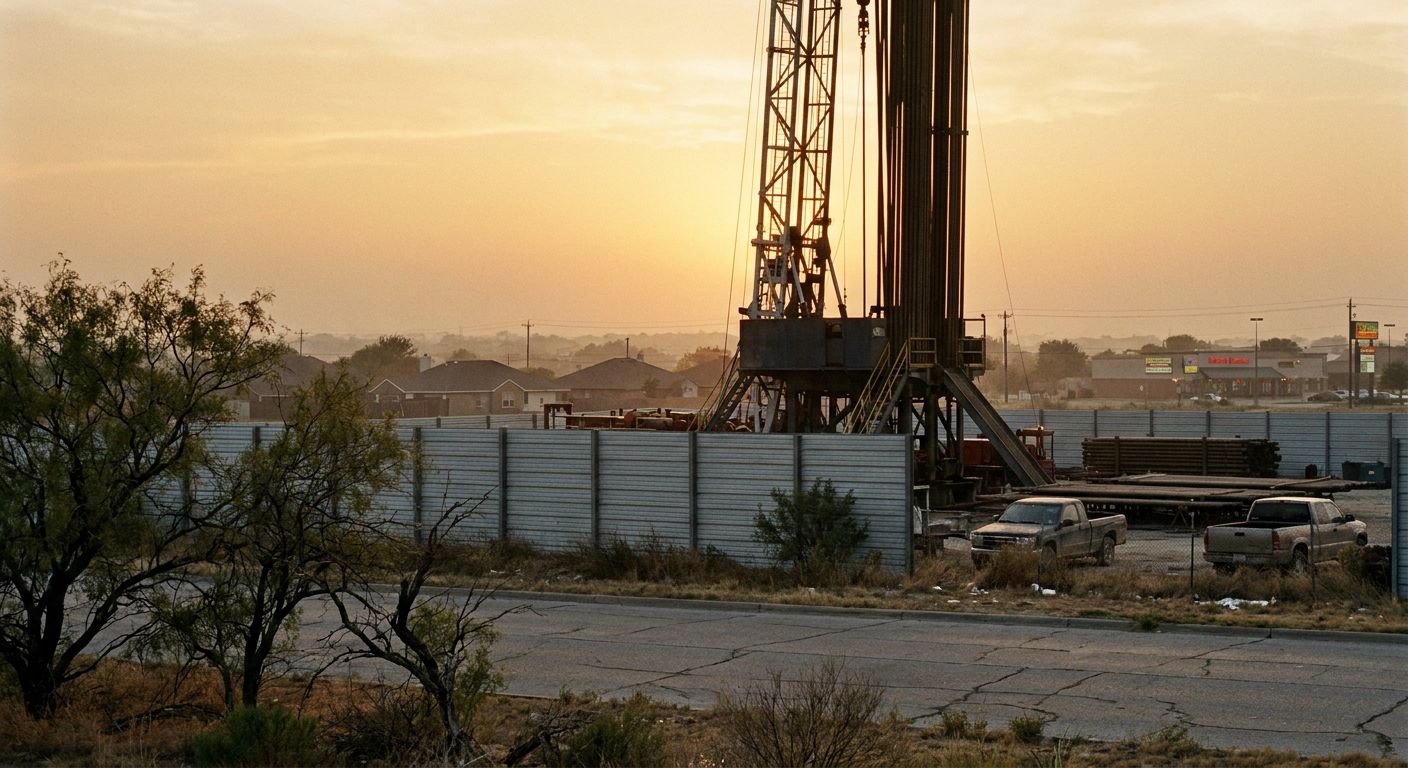
If you were to fly over the scrubland of North Texas a few decades ago, you would have seen a landscape defined by cattle, mesquite trees, and the occasional conventional oil derrick—a symbol of an industry that many believed was in its twilight. Beneath the boots of those ranchers lay a layer of dark, organic-rich sedimentary rock known as the Barnett Shale. For nearly a century, geologists knew it was there. They knew it was saturated with natural gas. But the rock was so tight, its pores so microscopic, that the fuel was effectively locked in a stone prison.
The story of the Barnett Shale is not just a tale of geology, but of a stubborn, high-stakes gamble that fundamentally altered the global energy landscape. It is the story of how a few determined engineers in the late 20th century turned a "garbage" formation into the birthplace of the modern shale revolution.
The Man Who Wouldn't Walk Away
In the early 1980s, the American energy industry was convinced that the era of easy fossil fuels was over. Conventional reservoirs—large underground "bowls" of oil and gas that flowed easily to the surface—were drying up. The Barnett Shale, stretching across 5,000 square miles centered around Fort Worth, was considered a "source rock." It was the kitchen where the gas was cooked, but no one believed you could actually dine there. The gas was trapped in rock as dense as a concrete sidewalk.
George Mitchell, the son of a Greek immigrant and head of Mitchell Energy, disagreed. While his peers were looking toward deep-sea drilling or international frontiers, Mitchell spent nearly twenty years and millions of dollars trying to "break" the Barnett. His engineers experimented with various cocktails of water, sand, and chemicals, pumped at high pressure to crack the rock—a process known as hydraulic fracturing, or "fracking." For years, the results were marginal. Wall Street analysts urged him to stop wasting money on a pipe dream. But Mitchell, driven by a hunch that the Barnett held the key to American energy independence, refused to blink.
The Marriage of Two Technologies
The breakthrough didn't happen overnight; it was a slow-motion explosion. By the late 1990s, Mitchell’s team perfected "slickwater" fracturing, which used much more water and fewer expensive chemicals, making the process economically viable. However, the real magic happened when they combined fracking with a second, older technology: horizontal drilling.
Instead of just punching a vertical hole through the narrow layer of shale, drillers could now turn the bit 90 degrees and steer it through the rock for miles. This exposed the wellbore to vastly more gas-bearing stone. When the Barnett finally "yielded," it did so with a force that stunned the industry. Production numbers that were once laughed at became the new gold standard. Suddenly, a region that was supposedly running out of energy was sitting on one of the largest gas fields in the United States.
A Landscape Transformed
As the 2000s dawned, the "shale gale" roared out of the Barnett and across the country. The quiet suburbs of Fort Worth were suddenly dotted with drilling rigs nestled behind sound walls next to shopping centers and high schools. This was "urban drilling," a phenomenon that brought the complexities of the oil patch into the backyard of the American middle class.
The economic windfall was staggering. Mineral rights turned modest landowners into "shale-aires" overnight. Tax revenues built new stadiums and paved roads. However, the rapid expansion also sparked intense debate over water usage, air quality, and the tremors caused by wastewater injection wells. The Barnett Shale became the laboratory for the environmental and social conflicts that now define the modern energy era.
The Global Echo
The legacy of the Barnett Shale extends far beyond the Texas borders. The techniques refined in those North Texas pastures were exported to the Bakken in North Dakota, the Marcellus in Appalachia, and eventually to oil-rich formations like the Permian Basin. It shifted the geopolitical balance of power, turning the United States from a desperate importer of energy into a dominant global exporter.
Today, the Barnett is considered a "mature" field. The frantic drilling rigs have largely moved on to newer, even bigger plays. But the silence in the North Texas fields is deceptive. The revolution that started in these tight, dark rocks changed the way the world thinks about limits. It proved that "exhausted" resources are often just waiting for a new way of seeing—and a leader stubborn enough to keep drilling.
The success in Texas sparked a feverish hunt for similar formations across the planet, leading geologists to a massive, ancient basin in the northeast.
This story travelled through
Where does this story take you next?
Every story opens a door somewhere else. Pick a thread and we'll tell you that story too.
Curious about something else?
Discover another exploration