The Keepers of the Red Stripes: The Matriarchs of Kihnu
On a small island in the Baltic Sea, the absence of men created one of the world's last surviving matriarchies.
This story began with a question: “How did the women of Kihnu Island preserve a distinct culture while the men were lost to the sea?”
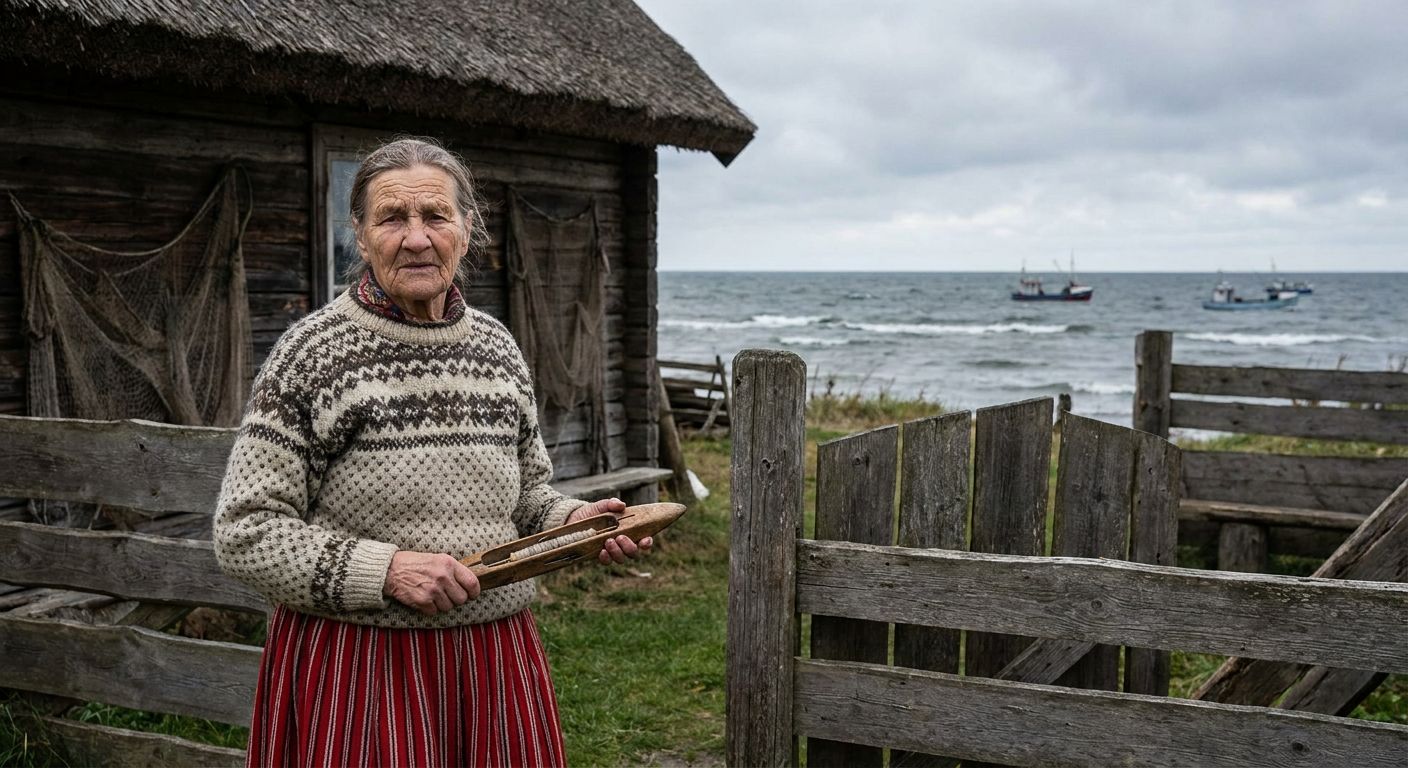
In the churning, slate-gray waters of the Gulf of Riga, the horizon is rarely steady. For centuries, the men of Kihnu, a small speck of land about 12 kilometers off the Estonian coast, looked at this restless expanse not as a view, but as an office. They were seal hunters and sailors, men who vanished for months at a time to navigate the ice floes or transport goods across the Baltic. While they wrestled with the sea, the land behind them was left in the hands of the women.
This was not a temporary arrangement, but a way of life that hardened into a unique social structure. Because the men were so often absent—or, tragically, claimed by the waves—the women of Kihnu became the guardians of everything else. They became the farmers, the mechanics, the spiritual leaders, and the unwavering curators of a culture that feels less like a museum piece and more like a living, breathing resistance against the modern world.
The Island of Red Skirts
To arrive at Kihnu today is to see a flash of red against the green pines. The women here are famous for their kört, the heavy, hand-woven wool skirts striped with vibrant colors. These aren't costumes for tourists. They are daily wear. They function as a visual language that communicates the wearer’s life stage and mood. A bright red skirt signals youth and joy; as a woman ages or enters mourning, the red stripes narrow, replaced by darker tones of blue or black.
When the men were away hunting seals in the winter, the sound of the loom became the heartbeat of the island. The isolation of Kihnu meant that while the mainland was buffeted by the shifting winds of Soviet occupation or European modernization, the islanders looked inward. They kept their dialect—a tongue rich with maritime terms and ancient Finno-Ugric echoes. They preserved their wedding traditions, which can last for three days and involve ancient runic singing. In Kihnu, the woman is the pillar. She is the one who ensures that when a man finally steps off a boat, he returns to a home that still remembers who it is.
The Seal and the Sweater
The rhythm of Kihnu life was traditionally dictated by the migration of the ringed seal. During the brutal Baltic winters, the men would trek out onto the frozen sea, living in nomadic camps on the ice for weeks. They were hunting for oil and skins, essential commodities for the island's survival. To withstand the sub-zero spray, they wore the troi—a distinctive Kihnu sweater knitted so densely with fine sheep’s wool that it became almost waterproof.
The patterns on these sweaters were more than just decoration; they were a form of protection. The geometric motifs were believed to ward off evil spirits and keep the wearer safe from the "sea devils" that lurked beneath the ice. Every stitch was a prayer for return. Yet, the sea is an indifferent master. The island’s cemetery is a quiet testament to the cost of this life, filled with markers for men whose bodies were never recovered. In their absence, the widows didn't just grieve. They took over the plows, managed the village councils, and maintained the community’s moral and social order.
A Matriarchy by Necessity
This "matriarchy" wasn't born of a political movement, but of geographical necessity. While the men were navigating the Gulf of Riga, the women were navigating the complexities of survival. They even managed to steer the community through the era of Soviet collectivization. While the state attempted to standardize life across the Eastern Bloc, the women of Kihnu quietly persisted, maintaining their folk songs and dances under the guise of local "clubs." This repertoire is so unique that UNESCO recognized the Kihnu Cultural Space as a Masterpiece of the Oral and Intangible Heritage of Humanity.
Even as the motorboat replaced the sail and the commercial seal hunt faded into history, the social hierarchy remained intact. The decline of the seafaring economy didn't erode the women's authority; it solidified it. Today, the older women—the memmes—remain the ultimate authorities. You might see them zip past on vintage sidecar motorcycles, their colorful skirts billowing in the wind, heading to a meeting or to tend to a field. They are the mechanics of their own destiny, using modern technology to keep their isolated community connected while refusing to trade their looms for factory-made convenience.
The Living Loom
The survival of Kihnu culture is a lesson in the power of isolation. Had the island been bridge-linked or easily accessible, the pressures of the 20th century likely would have smoothed over its rough, beautiful edges. Instead, the sea acted as a moat, preserving a version of Estonia that is both ancient and fiercely independent.
As the sun sets over the Gulf of Riga, casting a long shadow across the lighthouse at the island’s southern tip, the challenge of the future looms. Young people are increasingly pulled toward the lights of Pärnu or the digital hubs of Tallinn, threatening to break the chain of the kört. The question for Kihnu is no longer just how to survive the sea, but how to maintain an ancient rhythm in a world that moves at the speed of the fiber-optic cables running beneath the waves. The red stripes continue to flash through the forest, a defiant signal that here, identity is still something woven by hand, one row at a time.
This story travelled through
Where does this story take you next?
Every story opens a door somewhere else. Pick a thread and we'll tell you that story too.
Curious about something else?
Discover another exploration