The Engineer Who Cracked the Rock
In a graveyard of failed Texas gas wells, a young engineer bet his career on a bucket of water and a radical hunch.
This story began with a question: “What is the story of Nick Steinsberger?”
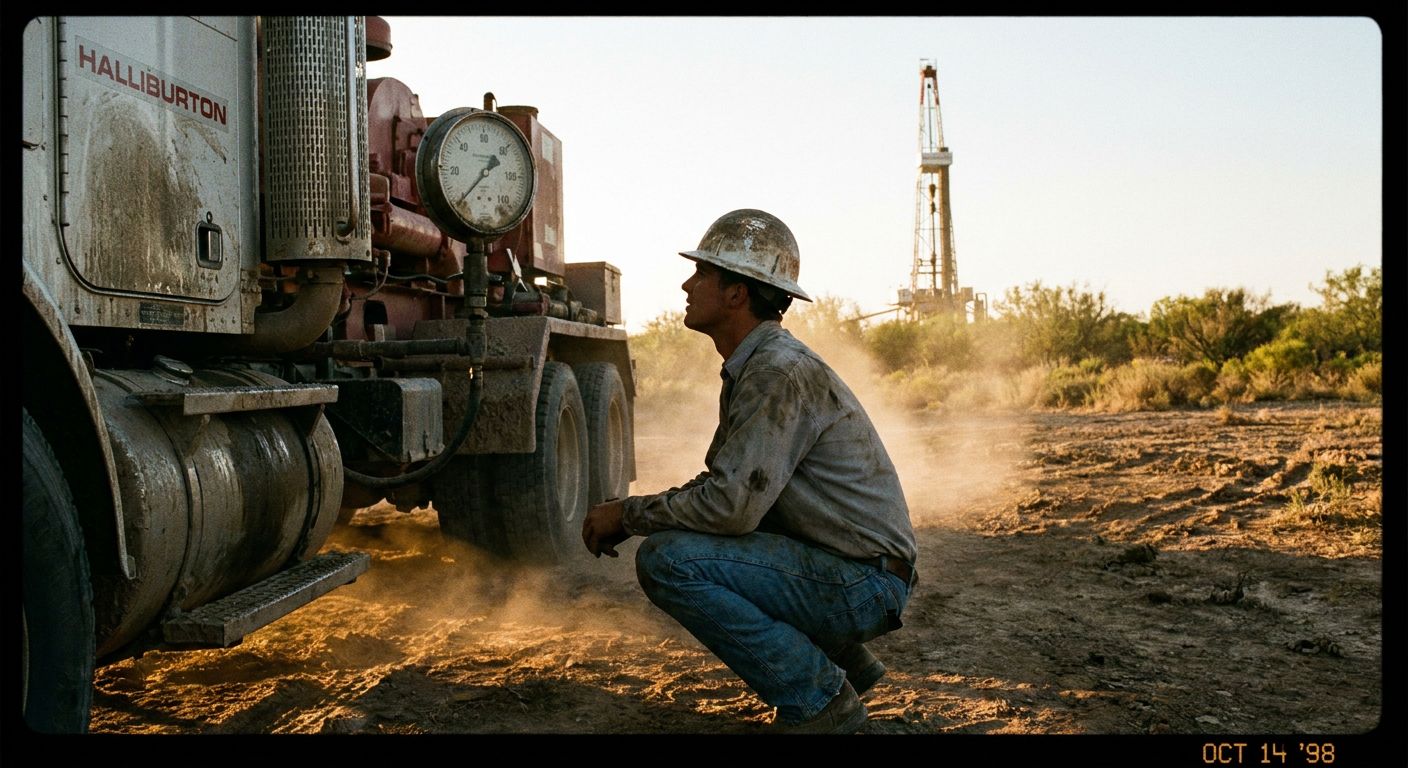
If you find yourself driving through the flat, scrubby expanse of North Texas, particularly the land north of Fort Worth known as the Barnett Shale, you are crossing a landscape that changed the world’s energy map. For decades, this region was considered a "graveyard" for oilmen. The gas was there, trapped deep in the dense, black rock, but it was held so tightly that no one could coax enough of it out to make a profit. By the late 1990s, the industry was ready to give up on the Barnett entirely.
Among the skeptics was a young completion engineer named Nick Steinsberger. He wasn't a legendary tycoon or a gray-haired veteran; he was a practical man working for Mitchell Energy, a company whose namesake, George Mitchell, was obsessed with cracking the shale code. Steinsberger was tasked with finding a way to make hydraulic fracturing—a process of pumping fluid into the earth to crack the rock—actually work in this stubborn geology. The method of the time involved thick, expensive gels that often clogged the very pores they were meant to open. Steinsberger’s solution was so simple it was considered borderline heretical: he wanted to use water.
The S.H. Griffin Gamble
In 1997, the mood at Mitchell Energy was grim. The company had spent nearly two decades and over $200 million trying to unlock the Barnett Shale with little to show for it. The traditional "gel fracks" were failing, and the board of directors was losing patience. Steinsberger, however, had been watching experimental techniques in other regions and noticed that thin, water-based fluids—often called "slickwater"—seemed to move through certain rocks more efficiently than the heavy, cross-linked gels.
Steinsberger proposed a radical experiment on a well known as the S.H. Griffin No. 4. Instead of the expensive chemical cocktails usually injected into the ground, he wanted to pump massive volumes of fresh water mixed with a small amount of sand and friction-reducing chemicals. To his superiors, it sounded like a recipe for disaster. The prevailing wisdom was that water would swell the clay in the shale, permanently sealing the gas inside. Steinsberger’s peers mocked the idea, suggesting he was just trying to save money by pumping "trash" into the ground.
The pressure on Steinsberger was immense. If the S.H. Griffin failed, it wouldn't just be a dry hole; it would likely be the end of Mitchell Energy’s shale program and a significant blow to Steinsberger’s career. He spent nights pacing the floor, re-checking his calculations. He wasn't just fighting the rock; he was fighting a century of established petroleum engineering. On the day of the frack, the pumps roared, sending millions of gallons of water two miles underground. Then, they waited.
A Silence Broken by a Roar
For the first few days after a frack, a well usually produces "flowback"—the fluid you just pumped in. The real test comes when the gas starts to follow. In previous Barnett wells, the gas production would start high and then plummet almost immediately, falling off a cliff until the well was no longer worth the electricity to run the pumps. Steinsberger watched the gauges on the S.H. Griffin No. 4 with bated breath.
The gas didn't just come; it stayed. Unlike the gel-fracked wells, the S.H. Griffin maintained a steady, robust flow. It was the "Eureka" moment the industry hadn't realized it was waiting for. Steinsberger had proved that the Barnett wasn't a graveyard; it was a treasure chest, and water was the key. By using slickwater, he had created longer, more complex fractures in the rock, allowing the gas to seep out from a much larger area.
This success triggered a gold rush. Once the "Steinsberger Frack" became the industry standard, the cost of completing a well dropped by hundreds of thousands of dollars while production soared. The S.H. Griffin No. 4 became the most famous well in Texas, a proof of concept that transformed Mitchell Energy from a struggling independent into a multi-billion dollar acquisition target for Devon Energy.
The Global Ripples of a Texas Well
The story of Nick Steinsberger is not just a tale of a lucky engineer; it is the origin story of the American "Shale Gale." When his slickwater technique was combined with horizontal drilling a few years later, the results were tectonic. Geographies that were once energy-poor suddenly became exporters. The United States, which had been bracing for a permanent decline in domestic energy production, suddenly found itself sitting on a century’s worth of natural gas.
However, the legacy of the slickwater frack is as complex as the geology it unlocked. The massive requirement for fresh water—millions of gallons per well—sparked intense debates over water rights in arid regions. The disposal of that water after it returned to the surface, often laden with salts and minerals from deep underground, led to concerns about seismic activity and groundwater safety. Steinsberger’s innovation solved one massive engineering problem but birthed a generation of environmental and social challenges that the world is still navigating today.
Steinsberger himself eventually moved on from Mitchell Energy, continuing his work as a consultant and engineer, but his name remains synonymous with the moment the industry stopped guessing and started knowing. He remains a figure of quiet intensity, a man who looked at a wall of solid rock and saw a way through it using the simplest substance on Earth.
Today, the S.H. Griffin No. 4 is more than a hole in the ground; it is a monument to the power of the contrarian. It serves as a reminder that in the world of exploration, the greatest breakthroughs often come not from adding complexity, but from having the courage to strip it away. As the world shifts toward newer forms of energy, the "shale revolution" Steinsberger sparked remains one of the most significant pivots in the history of human industry.
This story travelled through
Where does this story take you next?
Every story opens a door somewhere else. Pick a thread and we'll tell you that story too.
Curious about something else?
Discover another exploration