The Bug that Drank Spain Dry: The Great Phylloxera Crisis
In the late 1800s, a microscopic hitchhiker from the Americas turned Spain's 'green gold' to dust and triggered a national exodus.
This story began with a question: “How did a tiny insect almost destroy the economy of 19th-century Spain?”
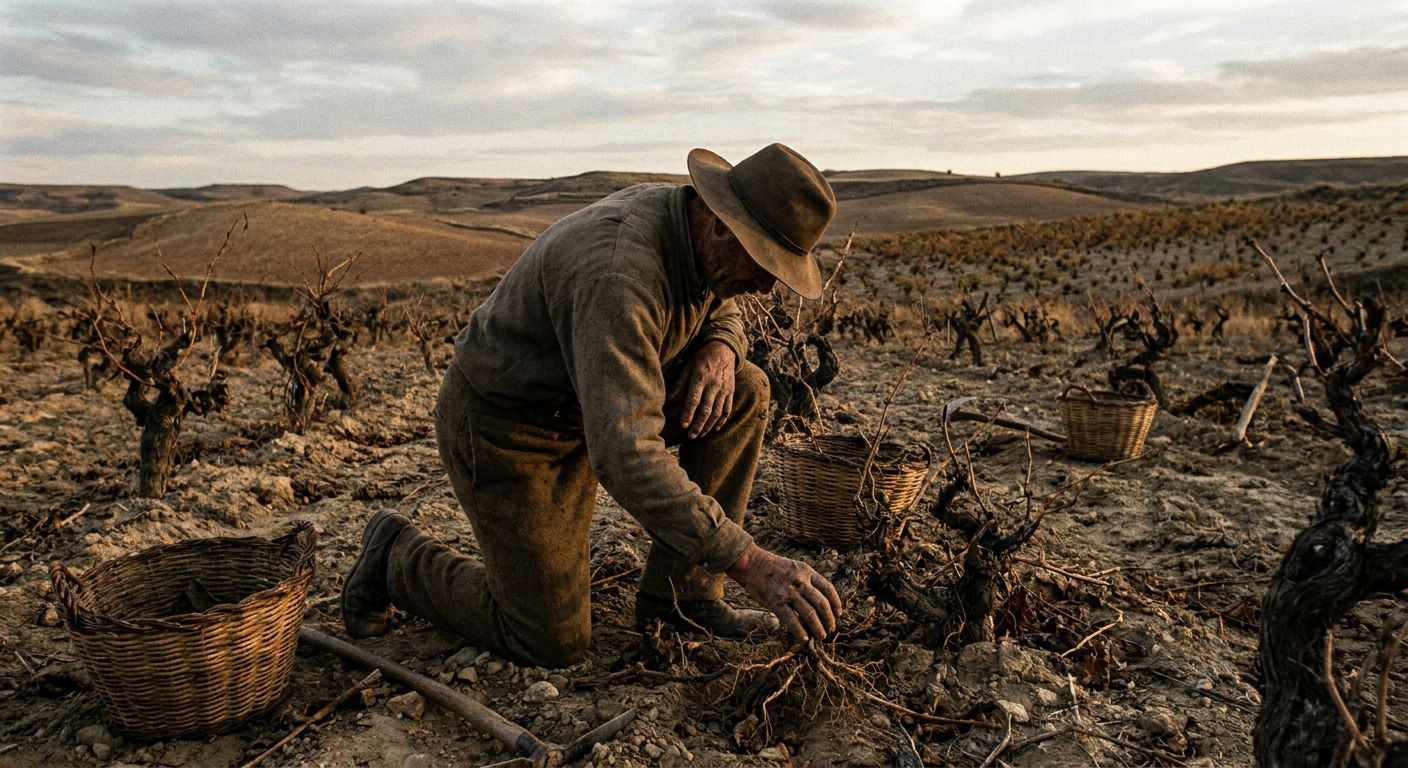
If you walk through the undulating hills of La Rioja or the sun-drenched slopes of Andalusia today, the landscape seems permanent—an ancient tapestry of gnarled vines that have always been there. But in the late 19th century, a silent, invisible terror began to rot this foundation from the inside out. It arrived not with the thunder of an invading army, but in the luggage of a scientist, hitching a ride on an American botanical specimen.
The enemy was Phylloxera vastatrix, a microscopic aphid with a voracious appetite for the roots of the European grape vine (Vitis vinifera). For Spain, a nation whose soul and economy were fermented in the wine vat, this was more than an agricultural crisis; it was an existential threat that nearly toppled the kingdom’s finances and permanently altered the map of global viticulture.
The Bordeaux Migration and the Spanish Boom
To understand how Spain almost fell, one must first look across the Pyrenees. In the 1860s, Phylloxera began devouring the vineyards of France. The "Great French Wine Blight" was a slow-motion disaster that wiped out nearly 40% of French vineyards over fifteen years. Paradoxically, this was initially a golden age for Spanish winemakers. As French production plummeted, the world turned to Spain to fill its glasses.
Spanish exports surged, and the region of La Rioja became a laboratory for innovation. Winemakers from Bordeaux, desperate to maintain their brands, moved south, bringing with them modern techniques of aging in oak barrels and sophisticated blending. Figures like Jean Pineau, a cellar master from Bordeaux, were hired by Spanish pioneers such as the Marqués de Riscal to transform the local Tempranillo into something that could compete on the global stage. For a brief, shimmering moment, Spain was the vineyard of the world. This newfound wealth manifested in grand architectural projects, most notably the "Cathedrals of Wine"—soaring, Modernista structures designed by architects like Cèsar Martinell, a disciple of Antoni Gaudí, who brought the grace of Gothic arches to the functional spaces of fermentation in towns like Pinell de Brai. But the insect was patient, and it was moving south.
The Invisible Invader in Málaga
The first Spanish casualty was recorded in 1876 in the province of Málaga, likely arriving on imported vines intended to improve local stock. The devastation was terrifyingly efficient. Phylloxera lives beneath the surface, sucking the sap from the roots and injecting a toxin that causes swellings and eventual rot. Because the insect is so small and lives underground, early attempts to stop it were desperate and often mystical. Farmers tried burying live toads under vines to "draw out the poison," flooding fields with water until the roots rotted, or injecting the soil with carbon bisulfide—a highly flammable and expensive chemical that often killed the plant along with the bug.
In Málaga, the consequences were devastating. The region was world-famous for its sweet wines and raisins, produced from Pedro Ximénez and Moscatel grapes. As the bug decimated these specific varieties, the global market for sweet Mediterranean wines collapsed, shifting the world's palate toward the dry reds of northern Europe. By the time a farmer noticed his leaves turning yellow and his harvest shrinking, the colony had already moved on to the next row, turning thousands of hectares of ancestral vines into grey wood.
Economic Collapse and the Great Wine Exodus
The social impact was seismic. In regions like Catalonia and La Rioja, entire villages were abandoned as the "green gold" disappeared. Unlike a bad frost or a year of drought, Phylloxera didn't just kill the season's crop; it killed the capital—the vines themselves, some of which had been producing for over a century. Smallholders who had borrowed money to expand during the boom years found themselves with nothing but debt.
Tens of thousands of Spaniards, particularly from the north and the Mediterranean coast, fled the blighted fields for a new life in the Americas. This agricultural collapse fueled a massive wave of emigration to Argentina, Uruguay, and Cuba. The loss of labor and the collapse of tax revenue from wine exports put the Spanish government in a precarious position, struggling to modernize a country that was literally rotting at its roots.
The Botanical Marriage of Necessity
The salvation of the Spanish wine industry came from the very place the plague had originated: North America. Scientists discovered that American vine species, such as Vitis labrusca, had evolved alongside the aphid and developed a natural resistance. The solution was a horticultural marriage of convenience: grafting the delicate, high-quality European Vitis vinifera branches onto the sturdy, resistant American rootstocks.
This process was grueling and expensive. It required ripping out millions of dead vines and replanting them with these new botanical unions. The landscape of Spain was physically rebuilt, root by root. While this saved the industry, it changed the wine forever. To speed up the recovery, many ancient, local grape varieties that were not deemed "commercially viable" were abandoned. Varieties like Querol or Garró were nearly lost to history, narrowing the genetic diversity of the world's wine in favor of a few dominant global players.
Today, almost every vine you see in Spain is a product of this 19th-century crisis—a European fruiting top supported by an American root. The aphid remains in the soil, a permanent resident, but its legacy is also found in the rediscovery of "ancestral grapes." Today, families like the Torres clan are scouring old farmhouse gardens to find the last surviving pre-Phylloxera vines, attempting to bring back the flavors that were nearly erased by a single, sightless bug.
This story travelled through
Where does this story take you next?
Every story opens a door somewhere else. Pick a thread and we'll tell you that story too.
Curious about something else?
Discover another exploration