The Archer's Debt: How Artemis Protected the Wild
Long before modern environmental law, the archer-goddess enforced a terrifying code of ethics that kept the ancient Mediterranean wild.
This story began with a question: “How did the cult of Artemis enforce one of history’s earliest forms of wildlife conservation?”
On the coastal marshes of Brauron, some thirty kilometers east of Athens, the ruins of a Doric stoa still stand against the Aegean salt air. Today, visitors see the weathered limestone of a temple dedicated to Artemis, but to a traveler in the 5th century BCE, this was the threshold of a sovereign territory where the laws of the polis ended and the laws of the Potnia Theron—the Mistress of Animals—began.
Artemis is frequently simplified as the archer-goddess of the hunt, yet her cult functioned as one of the ancient Mediterranean’s most effective systems of wildlife management. While her brother Apollo governed the ordered sun and the logic of the city, Artemis stood at the boundary of the untamed. Through the enforcement of sacred groves, ritual taboos, and seasonal bans, her worshipers transformed the fear of divine wrath into a functional tool for environmental preservation.
The Invisible Boundary of the Sacred Grove
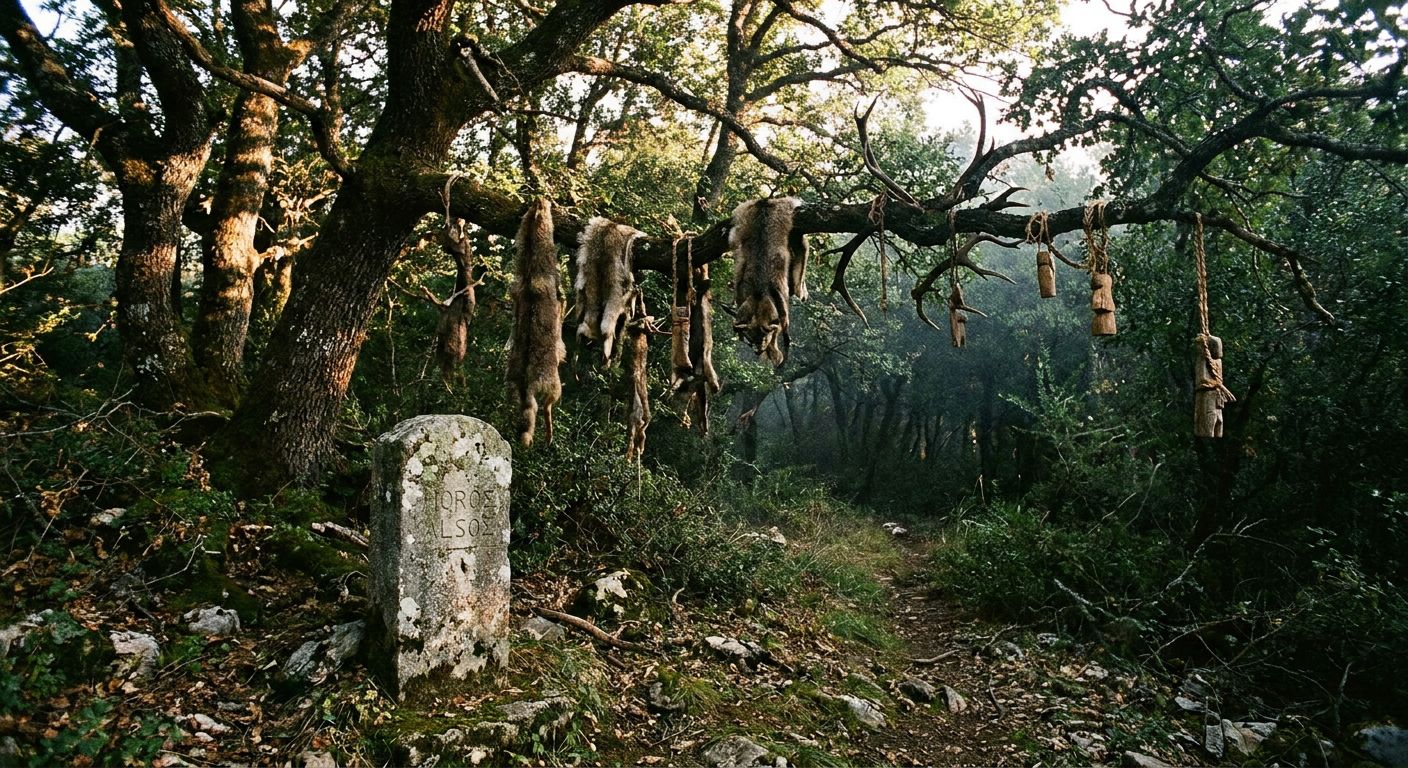
The centerpiece of this conservation effort was the alsos, or sacred grove. These were not merely aesthetic parks; they were strictly demarcated biological sanctuaries. Excavations at sites like the Sanctuary of Artemis at Brauron reveal how these spaces were physically separated from common land by horoi—inscribed boundary stones that warned humans to leave their axes and bows behind. Within these boundaries, the "wild" was allowed to remain truly wild.
Ancient writers describe these groves as lush pockets of biodiversity—ancient oaks, plane trees, and cypress thickets where deer, hares, and birds grew unnaturally bold. These were not merely parks, but designated biological sanctuaries where the axe and the bow were strictly forbidden. By designating these areas as the property of Artemis, the cult created "source" populations for local wildlife. While the surrounding Peloponnese might be overhunted or cleared for timber, the sacred grove acted as a nursery. The animals within could breed undisturbed, eventually creating a "spillover effect" into the surrounding countryside where they could be sustainably hunted. This wasn't just religious dogma; it was a practical strategy for maintaining ecological balance in a landscape increasingly squeezed by human expansion.
The Ethics of the Blood-Price
Outside the horoi, the cult of Artemis dictated a strict code of hunting ethics. A hunter was never a conqueror, but a guest at the goddess’s table. His behavior was scrutinized not by his peers, but by the divine. It was a grave taboo to kill a pregnant animal or a young nursing fawn. To do so was to steal from the future of the forest, an act that invited the goddess’s legendary retribution.
The ritual of the hunt ended with a debt. Before a hunter could bring his kill home, he had to offer a portion of the animal back to the Mistress of Animals. These votive offerings—the antlers of a stag or the pelt of a wolf—were nailed to trees or hung in small rural shrines across the slopes of Mount Taygetus. These trophies were not displays of human ego. They were acknowledgments of the goddess’s ownership. They served as a constant visual reminder that the animals were a finite resource held in trust. If a hunter took too much, he was not just greedy; he was a thief stealing from the gods.
The Calendar of the Bow
The cult also managed wildlife through the rhythm of the seasons. During festivals like the Elaphebolia (the "Deer-Shooting"), hunting was ritualized and restricted. These religious cycles often aligned with the breeding and migration seasons of local fauna. By declaring certain months "sacred" to Artemis, the cult effectively instituted seasonal hunting bans. This allowed populations to recover during their most vulnerable windows, ensuring the forest remained productive year after year.
This management even extended to the predators that competed with human shepherds. While wolves and bears were feared, they were also seen as Artemis’s personal hounds. The cult maintained a delicate tension between protecting livestock and respecting the predatory balance of the wilderness. To hunt a predator without a specific cause—such as a direct attack on a flock—was often seen as an overstepping of human authority, a disturbance of the Potnia Theron’s own pack.
The Wrath of the Neglected Wild
The power of these conservation laws lay in the terrifying consequences of their breach. Greek mythology is littered with cautionary tales of those who forgot the ecological debt. Agamemnon, the king of Mycenae, famously drew the goddess's ire by killing a stag within a sacred grove. The result was a symbolic death of the natural forces he had offended: the winds ceased, and his fleet was paralyzed. It was a stark reminder that to disrupt the balance of the wild was to forfeit the cooperation of nature itself.
A community that allowed a hunter to over-exploit the local woods risked collective divine punishment—famine, drought, or the "plague of the wild." This cultural fear created a self-policing society. The cult of Artemis transformed conservation from a bureaucratic chore into a spiritual necessity. Today, as ecologists study the "micro-reserves" of the Mediterranean, they find that many areas of high biodiversity overlap with ancient sacred sites. The goddess may have faded into myth, but the silence of her ancient groves remains a testament to history’s first, fiercest guardian of the wild.
This story travelled through
Where does this story take you next?
Every story opens a door somewhere else. Pick a thread and we'll tell you that story too.
Curious about something else?
Discover another exploration